Multiple Sclerosis
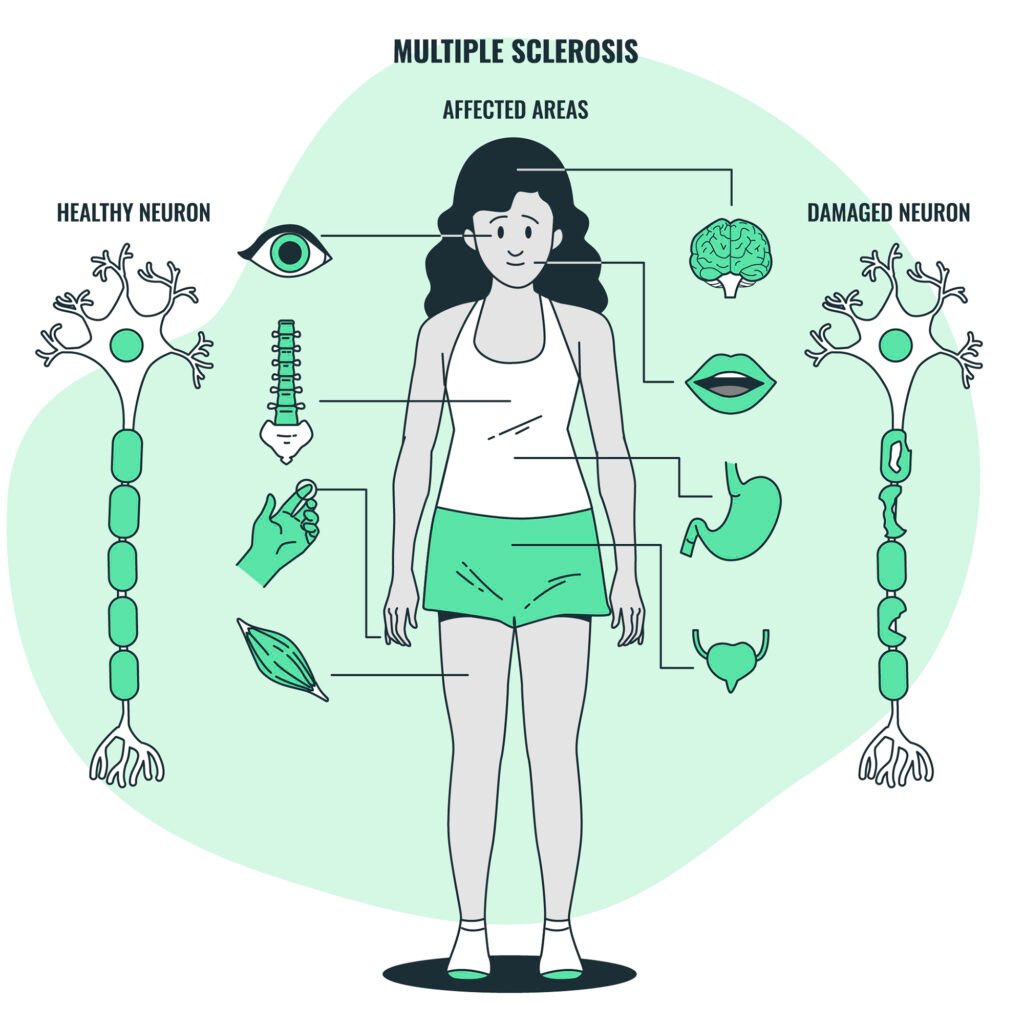
Multiple sclerosis (MS) is a chronic autoimmune disorder in which the immune system mistakenly attacks the myelin sheath—the protective covering of nerve fibers—in the brain and spinal cord. This demyelination disrupts nerve signaling, leading to a wide range of neurological symptoms. Early recognition and management of MS can slow disease progression and preserve function.
What Is Multiple Sclerosis?
MS typically presents in one of four clinical courses:
Relapsing-Remitting MS (RRMS): Unpredictable attacks (relapses) followed by periods of partial or complete recovery (remissions).
Secondary-Progressive MS (SPMS): Initially relapsing-remitting, then a progressive worsening of symptoms with fewer or no remissions.
Primary-Progressive MS (PPMS): Steady progression of disability from onset without relapses.
Progressive-Relapsing MS (PRMS): Progressive from onset with occasional relapses.
For comprehensive information, visit the National Multiple Sclerosis Society.
Signs and Symptoms
MS symptoms vary depending on lesion location and severity. The table below summarizes common manifestations:
| Symptom Category | Common Symptoms |
|---|---|
| Sensory | Numbness, tingling, “pins and needles,” burning sensations |
| Motor | Muscle weakness, spasticity, difficulty walking, tremors |
| Visual | Optic neuritis (painful vision loss in one eye), double vision (diplopia) |
| Coordination & Balance | Ataxia, dizziness, tremor, unsteady gait |
| Cognitive & Emotional | Memory impairment, difficulty concentrating, depression, mood swings |
| Autonomic | Bladder and bowel dysfunction, sexual dysfunction, heat sensitivity (Uhthoff’s sign) |
Symptoms often fluctuate over time and may worsen with heat, stress or infection.
Causes and Risk Factors
The precise cause of MS remains unknown, but several factors contribute:
Genetic Susceptibility: Variants in immune-related genes like HLA-DRB1 increase risk.
Environmental Triggers: Low vitamin D levels, smoking, obesity in adolescence.
Infectious Agents: Epstein–Barr virus infection is strongly linked to MS risk.
Geographic Factors: Higher prevalence in temperate climates farther from the equator.
Gender and Age: Women are two to three times more likely to develop MS; typical onset is between ages 20 and 40.
Learn more about risk reduction from the National Institutes of Health.
How Multiple Sclerosis Is Diagnosed
Clinical Assessment: Neurological exam to identify signs such as reflex changes, muscle strength and coordination.
Magnetic Resonance Imaging (MRI): Detects lesions (“plaques”) in white matter of brain and spinal cord.
Evoked Potentials: Measures electrical responses in the brain to visual, auditory or sensory stimuli.
Cerebrospinal Fluid Analysis: Oligoclonal bands and elevated IgG index indicate inflammation.
McDonald Criteria: Combines clinical attacks and MRI findings to confirm MS diagnosis.
Dr. Singh integrates advanced imaging and laboratory testing with a patient-centered evaluation to ensure diagnostic precision.
Treatment and Management
While there is no cure for MS, early intervention with disease-modifying therapies (DMTs) can reduce relapse rates and delay progression:
Injectable DMTs: Interferon beta, glatiramer acetate
Oral DMTs: Fingolimod, dimethyl fumarate, teriflunomide
Infusion DMTs: Natalizumab, ocrelizumab, alemtuzumab
Symptom Management: Physical therapy for spasticity; baclofen or tizanidine for muscle stiffness; dalfampridine for walking speed
Acute Relapse Treatment: High-dose corticosteroids or plasma exchange for severe attacks
Lifestyle and Support: Regular exercise, balanced diet, stress reduction and support groups to maintain well-being
Explore full therapy options on our Treatments page.
Taking the Next Step
If you experience vision changes, weakness or sensory disturbances, early evaluation is essential to confirm or rule out MS.
Schedule your consultation via our Book Appointment page.
For questions or further guidance, visit our Contact Us page.
Return to our Home page at any time for up-to-date resources and patient stories.