Sciatica / Slipped Disc
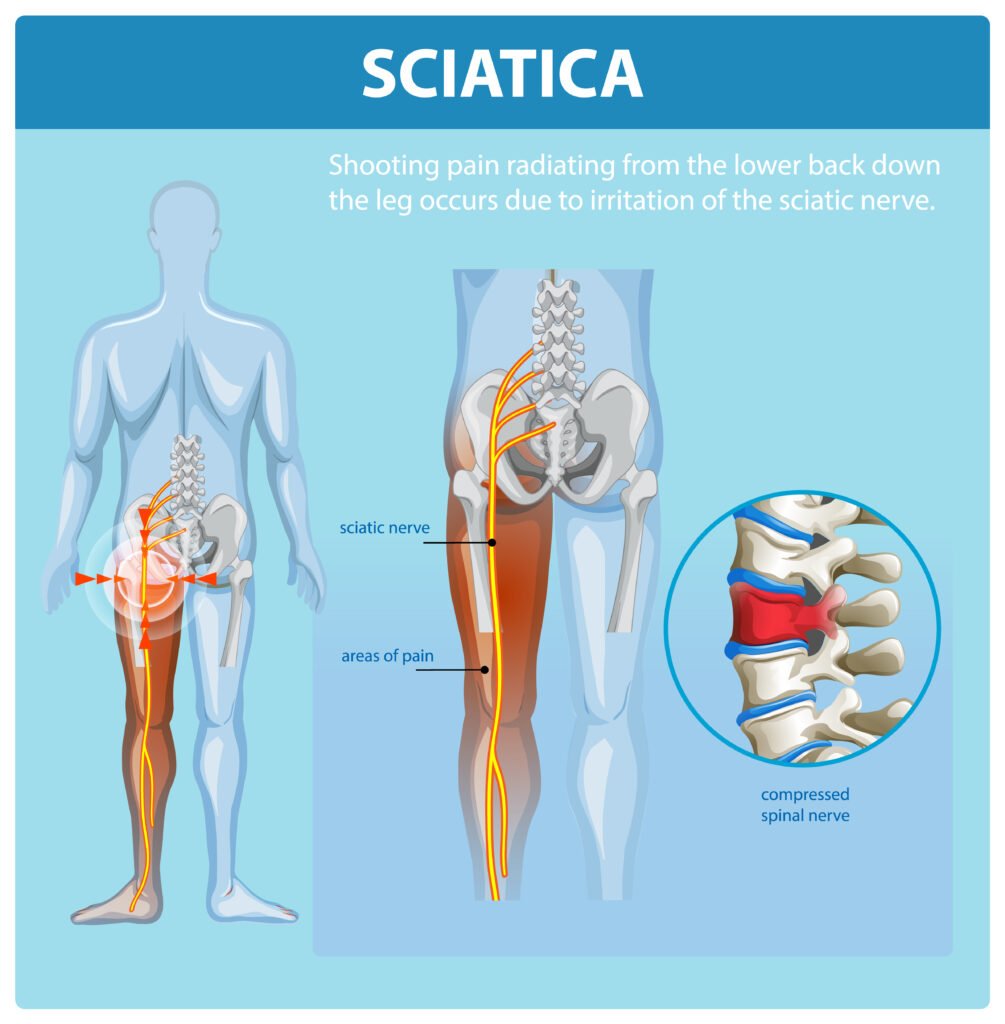
Sciatica and slipped (herniated) discs are common spinal conditions that can cause significant leg and back pain, limiting daily activities. Understanding their differences, warning signs and treatment options empowers you to seek prompt care and prevent chronic disability.
What Are Sciatica and a Slipped Disc?
A slipped disc, also known as a herniated disc, occurs when the soft inner core of an intervertebral disc protrudes through its outer layer, irritating nearby nerves. When this herniation compresses the sciatic nerve—the body’s longest nerve—it produces sciatica, characterized by pain radiating from the lower back down one or both legs.
For a detailed explanation, see the Mayo Clinic’s overview of herniated disc.
Signs and Symptoms
Although sciatica and slipped discs overlap, key features help distinguish them:
| Sign/Symptom | Sciatica | Slipped Disc |
|---|---|---|
| Pain Location | Sharp, shooting pain radiating from buttock into leg | Localized back pain; may radiate if nerve root is affected |
| Numbness or Tingling | Along sciatic nerve distribution (back of thigh, calf) | In area served by compressed nerve root |
| Muscle Weakness | Difficulty lifting foot or moving leg | Weakness in muscles controlled by affected nerve |
| Aggravating Movements | Sitting, coughing or sneezing | Bending, lifting, twisting |
| Relief with Position | Standing or walking often eases symptoms | Lying flat or reclining reduces pressure on disc |
| Reflex Changes | Reduced ankle or knee reflexes | Reflex loss depending on nerve root level |
A thorough neurological exam confirms the pattern of symptoms and guides further evaluation.
Causes and Risk Factors
Factors contributing to slipped discs and sciatica include:
Age-Related Degeneration: Discs lose hydration and elasticity over time.
Heavy Lifting or Twisting: Sudden strain can tear the disc’s outer layer.
Obesity: Excess weight increases spinal load and accelerates wear.
Poor Posture: Slouching or prolonged sitting stresses lumbar discs.
Sedentary Lifestyle: Weak core and back muscles reduce spinal support.
Trauma or Injury: Falls, accidents or sports injuries can precipitate herniation.
Learn preventive strategies from the National Institute of Neurological Disorders and Stroke.
How These Conditions Are Diagnosed
Medical History & Physical Exam: Assessment of pain patterns, reflexes and muscle strength.
Straight Leg Raise Test: Reproducing leg pain when lifting the straightened leg indicates sciatic nerve irritation.
Imaging Studies:
MRI: Gold standard to visualize disc herniation and nerve compression.
CT Scan or X-ray: May detect bone spurs or spinal canal narrowing.
Electrodiagnostic Tests: EMG and nerve conduction studies when diagnosis is unclear.
Dr. Singh employs precise diagnostic protocols to pinpoint the affected disc level and nerve root.
Treatment and Management
Treatment aims to relieve pain, restore function and prevent recurrence:
Conservative Measures:
Medications: NSAIDs for inflammation; muscle relaxants for spasms; neuropathic agents if nerve pain persists.
Physical Therapy: Core-strengthening exercises, stretching and posture training.
Activity Modification: Avoiding heavy lifting and prolonged sitting; ergonomic adjustments.
Heat and Cold Therapy: Alternating warm packs and ice to reduce pain and swelling.
Minimally Invasive Interventions:
Epidural Steroid Injections: Targeted delivery of corticosteroids to decrease nerve root inflammation.
Nerve Blocks: Temporary pain relief for diagnostic and therapeutic purposes.
Surgical Options (for refractory cases):
Microdiscectomy: Removal of herniated disc fragments to decompress the nerve.
Laminectomy: Widening the spinal canal when there is significant stenosis.
Explore personalized care plans on our Treatments page.
Taking the Next Step
If you experience persistent leg pain, numbness or weakness, early evaluation can prevent long-term disability.
Schedule your assessment on the Book Appointment page.
For questions or further guidance, visit our Contact Us page.
Return to our Home page for ongoing resources and updates.